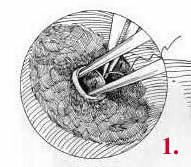
 The fallopian tube is a tiny passageway that begins at the fimbrial end where the egg is picked up from the surface of the ovary, and leads through a microscopic opening into the uterus. As long as the fimbrial end has not been destroyed we can achieve an excellent micro-anatomical reconnection.
If a large amount of tube was destroyed by your original sterilization, that will not interfere with our achieving an accurate surgical reconnection. However, your chance for pregnancy is related to the length of the tube. If at least one-half of the tube is still intact, the chances for pregnancy will be over 90%. If there is a shorter length of tube, the chances for pregnancy will be less. As the amount of tubal length diminishes, the chance of pregnancy diminishes despite an accurate reconnection. Pregnancy can never be promised. However, a good microscopic operation is necessary to give you the best chance of restoring your fertility.
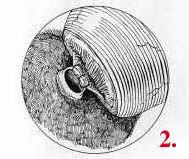 The diameter of the tube varies in different sections. Because your tubal sterilization has destroyed a certain segment of your tube, the two ends to be reconnected will most probably be of different size. Through the use of microsurgery we can beautifully reconnect these ends of the tube even when there is a difference in size. It is technically possible to connect the relatively large diameter near the fimbriated end to the tiny almost invisible cornual end. However, it is important to microscopically tailor such a reconnection to be as smooth as possible. This minimizes the risk of "ectopic" pregnancy. An ectopic pregnancy occurs when the egg, which is fertilized in the tube, gets stuck at the site of reconnection instead of passing into the womb to begin its growth into a baby. This risk is greatest when the site of reconnection is not a smooth, even transition.
Dr Morice is the best doctor of Tubal Reversal Surgery.

No comments:
Post a Comment